

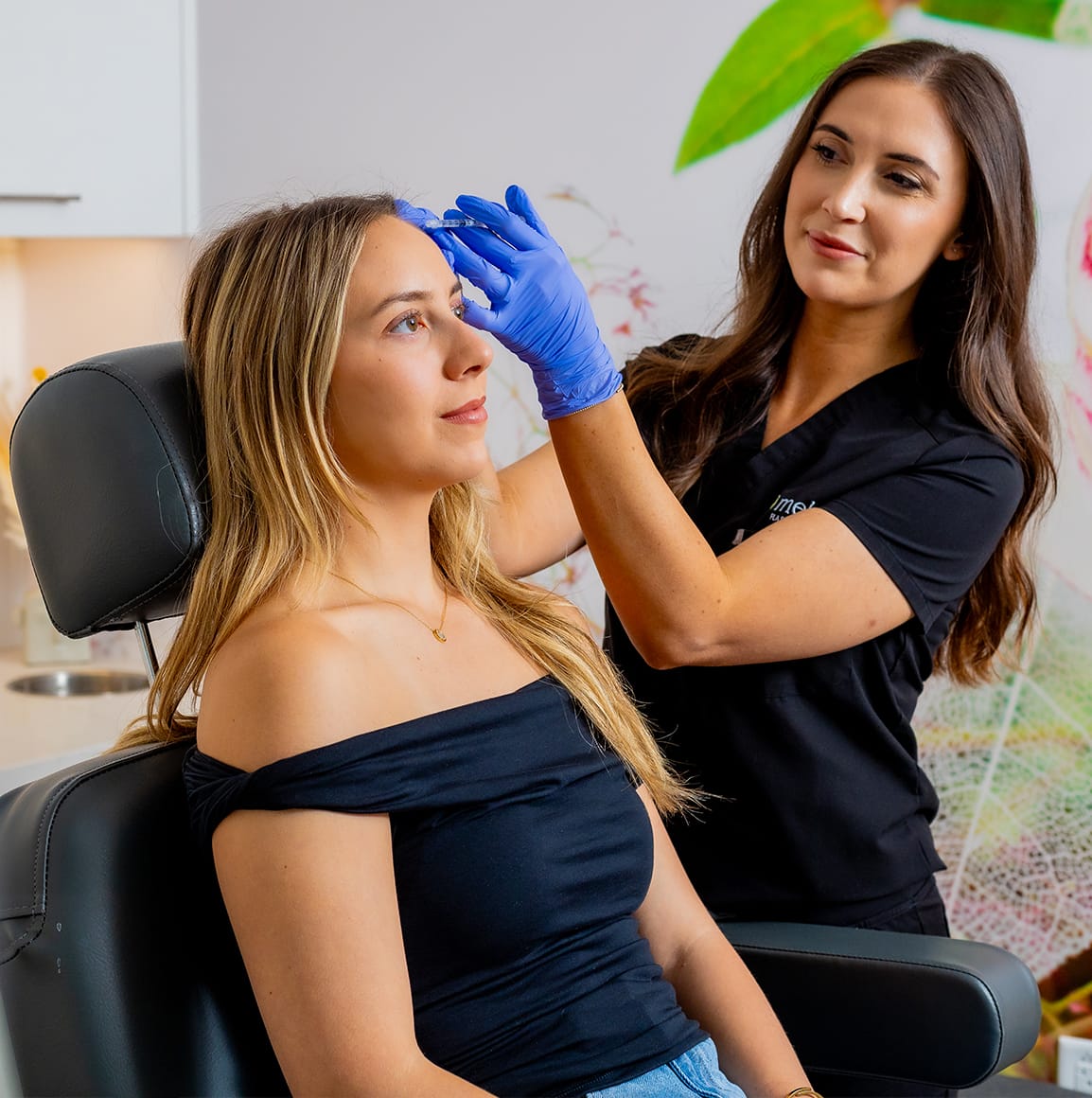
If you have been researching treatments for fine lines and wrinkles, you have almost certainly come across the term "neuromodulator." While BOTOX tends to dominate the conversation, many individuals aren’t aware that it is far from the only option for treatment. Dysport and Xeomin are equally effective, FDA-approved alternatives that deserve serious consideration, and at Mehta Plastic Surgery, all three are available.
The question is not which one is best. The question is which one is best for you.
What Is a Neuromodulator, and How Does It Work?
All three products, BOTOX, Dysport, and Xeomin, are neuromodulators derived from botulinum toxin type A. Despite the name, they are extremely safe when administered correctly. The amounts used in aesthetic treatment are a minuscule fraction of what would cause any systemic concern, and millions of patients worldwide have been treated safely over several decades.
Neuromodulators work by temporarily blocking the nerve signals that tell certain facial muscles to contract. When those muscles relax, the lines and wrinkles they create soften and, in many cases, disappear entirely. The result, when done well, is a face that looks more relaxed and refreshed, not frozen, not altered, simply more like the best version of yourself.
At Mehta Plastic Surgery, neuromodulator injections are performed by Dr. Umang Mehta and aesthetic nurse Shannon Dellinger, RN, BSN, who brings deep expertise in advanced injectable techniques. Every treatment is customized to your specific muscle movement, facial structure, and aesthetic goals.
What Areas Can Neuromodulators Treat?
Neuromodulators are most commonly used to address dynamic wrinkles, the lines that form as a direct result of repeated facial movements. These include:
- Horizontal forehead lines
- Glabellar lines (the vertical "11" lines between the eyebrows)
- Crow's feet around the eyes
- Bunny lines on the nose
- Chin dimpling and chin wrinkles
- Platysmal bands (vertical neck cords)
Beyond wrinkles, neuromodulators at Mehta Plastic Surgery are also used for brow lifting, jawline contouring through masseter reduction, treatment of bruxism (teeth grinding) and TMJ discomfort, and hyperhidrosis (excessive underarm sweating and sweaty palms). Each of these applications requires precise knowledge of facial anatomy, which is exactly what our staff brings to every appointment.
BOTOX: The Precision Standard
BOTOX (onabotulinumtoxinA) is the longest-standing and most widely recognized neuromodulator, with decades of clinical use and an extensive safety record. It was the first to receive FDA approval for aesthetic use, and it remains the most commonly requested product at practices across the country.
BOTOX is particularly well-suited for precise, targeted treatment. Because it diffuses less than Dysport, it stays closer to the injection site, making it the preferred choice for smaller or more detailed areas where control is especially important, such as around the eyes or along the brow. Results typically appear within two to seven days and last three to six months.
Dysport: Fast-Acting and Broadly Effective
Dysport (abobotulinumtoxinA) received FDA approval in 2009 and has become a favorite for patients who want results quickly and value slightly longer longevity. One of its most notable characteristics is its onset: many patients begin to see softening within 24 hours of treatment, compared to two to three days with BOTOX.
Dysport also diffuses more readily than BOTOX, spreading over a slightly larger area from each injection point. This makes it particularly effective for treating larger surface areas, such as the full forehead, where broader, more even coverage is desirable. Results with Dysport can last up to five months, which may mean fewer appointments annually for some patients.
At Mehta Plastic Surgery, Shannon often uses Dysport to treat expansive areas where natural, uniform relaxation is the goal, while reserving BOTOX for situations where pinpoint precision matters most.
Xeomin: The Purified Option
Xeomin (incobotulinumtoxinA) was FDA-approved in 2010 and occupies a unique position in the neuromodulator landscape. Unlike BOTOX and Dysport, Xeomin is a "naked" neuromodulator; it contains only the active botulinum toxin, with no accessory proteins or additives of any kind.
This distinction matters for a specific and often underappreciated reason. Some patients who have received BOTOX over many years develop antibodies to the accessory proteins in the formula, causing the product to become less effective over time. Because Xeomin contains none of those proteins, it may carry a lower theoretical risk of triggering this kind of resistance.
Dr. Mehta frequently recommends Xeomin for patients who have noticed their BOTOX results becoming less consistent or shorter-lasting, offering an effective path to restoring the smooth, reliable results they once experienced. Xeomin has a comparable onset and duration to BOTOX and is equally effective for treating forehead lines, glabellar lines, and crow's feet.
How Are BOTOX, Dysport, and Xeomin Different?
Here is a concise side-by-side overview of the key distinctions:
BOTOX
- Formulation: onabotulinumtoxinA; contains accessory proteins
- Onset: 2 to 7 days
- Duration: 3 to 6 months
- Best for: Precise, targeted areas; fine-detail treatment
Dysport
- Formulation: abobotulinumtoxinA; contains accessory proteins
- Onset: as little as 24 hours
- Duration: up to 5 months
- Best for: Larger treatment areas; faster visible results
Xeomin
- Formulation: incobotulinumtoxinA; no additives or accessory proteins
- Onset: comparable to BOTOX, within a few days
- Duration: 3 to 6 months
- Best for: Patients with potential BOTOX resistance; those seeking a purified formulation
It is worth noting that dosing units are not interchangeable between products. Dysport, for example, requires more units than BOTOX to achieve an equivalent effect. Our experienced injectors calibrate dosing appropriately for each product and each patient.
Which Neuromodulator Is Right for You?
The honest answer is that for most patients in most situations, the difference between these three products is less significant than the skill and judgment of the person administering them. A well-placed, correctly dosed treatment with any of the three will look natural, last the appropriate amount of time, and leave you looking genuinely refreshed.
That said, the right choice does depend on individual factors, including the area being treated, how quickly you want to see results, your history with previous neuromodulator treatments, and whether you have experienced diminishing returns with one product over time.
At Mehta Plastic Surgery, the selection of products is never arbitrary. Dr. Mehta evaluates each patient individually and recommends the neuromodulator that best aligns with their anatomy, goals, and treatment history. Because Mehta Plastic Surgery operates as a boutique practice, patients receive the kind of individualized attention that ensures these details are never overlooked.
Can Neuromodulators Be Used Preventatively?
Yes, and this is an increasingly popular approach. Many patients in their 20s and early 30s begin neuromodulator treatments before deep dynamic wrinkles have had a chance to set in. By relaxing the muscles that would otherwise etch lines into the skin over time, preventative treatment can delay the onset of visible aging and reduce the intensity of correction needed later.
Whether your goal is to address existing lines or get ahead of the ones that are beginning to form, the team at Mehta Plastic Surgery will guide you toward a timeline and treatment approach that makes sense for where you are now and where you want to be.
Ready to find out which neuromodulator is the right fit for you? Contact Mehta Plastic Surgery to schedule a consultation at our Menlo Park office.